

Introduction: Key Equipment for Composite Molding
BMC (Bulk Molding Compound), DMC (substantially identical to BMC), and SMC (Sheet Molding Compound) are key fiber-reinforced thermoset composites, with rising demand in the automotive, electrical, and construction sectors. Their molding relies on specialized hydraulic presses, among which the four-column and H-frame (frame-type) presses are two mainstream models. Selecting the appropriate press is critical to ensuring product quality, enhancing production efficiency, and optimizing ROI.

Core Working Principle: Precise Pressure and Temperature Regulation
Pascal's Law :
Hydraulic presses operate on Pascal's Law (hydrostatic transmission principle), leveraging the static pressure transmission characteristic of the hydraulic system to generate and output stable high pressure—this constitutes the fundamental force source for the compression molding of BMC/DMC/SMC.
Molding Cycle:
The typical compression molding cycle for fiber-reinforced thermosets follows a sequential process:
Rapid Descending→Pre-pressing→Exhaust→Curing & Pressure Holding→Mold Opening→Ejection.
Each stage serves a specific purpose:
Pre-pressing eliminates air gaps in the material and achieves initial shaping; exhaust removes volatile components and residual air to avoid defects; curing & pressure holding ensures full cross-linking and curing of the resin. Throughout the cycle, the Programmable Logic Controller (PLC) system implements closed-loop control algorithms to precisely regulate key process parameters including pressure, temperature, movement speed, and holding time—directly determining the consistency of product density and mechanical properties.

Heating System:
Mold heating is a critical prerequisite for the curing of thermosetting composites. Electric heating or oil-circulated mold temperature controllers are commonly adopted, which not only provide continuous and uniform heat required for the resin curing reaction but also maintain the uniformity of the mold's temperature field through real-time temperature feedback. This prevents curing unevenness caused by local temperature deviations, thereby ensuring the stability of the composite's chemical structure and surface quality.
In-depth Analysis of Press Structures: Four-Column vs. H-Frame
|
Type |
Structural Features |
Advantages |
Considerations |
|
Four-Column Hydraulic Press |
The core frame is composed of an upper beam, lower beam (worktable), moving crossbeam, and four columns; the moving crossbeam moves up and down under guidance along the four columns. |
|
Key consideration lies in its capability to maintain guiding accuracy under extreme off-center load conditions; long-term eccentric loading may cause column wear, requiring regular inspection of guiding clearances. |
|
H-Frame Hydraulic Press |
The rigid frame is usually fabricated by welding solid steel plates or cast steel components, delivering high structural rigidity; the slide block typically moves along the machine body’s eight-plane guides or 45° inclined guides, exhibiting strong resistance to off-center loads. |
|
1. High manufacturing costs due to difficult processing of welded frames and precision guides; 2. The machine frame structure imposes certain constraints on mold access space; adaptation to large molds requires advance planning. |
Core Differences Comparison and Selection Guide
|
Feature |
Four-Column Press |
H-Frame Press |
|
Structural Rigidity |
Good |
Extremely High |
|
Guidance System |
Round guide sleeves on four columns |
Surface contact (eight-plane or inclined) guidance |
|
Off-Center Load Capacity |
General, sensitive to off-center load |
Excellent |
|
Part Precision |
Good |
Higher, suitable for precision parts |
|
Cost |
More competitive |
Usually higher |
|
Maintenance Accessibility |
Good, open on three sides |
General |
|
Typical Applications |
Meter boxes, manhole covers, general structural parts |
Automotive parts (e.g., battery casings), aerospace components, parts requiring high surface quality |
Selection Advice:
When the following conditions are met, the four-column hydraulic press should be given priority: the budget is relatively limited; the production batch is large but the precision requirement is moderate for general BMC/DMC/SMC products (such as manhole covers, electricity meter boxes); the mold symmetry is good and the uneven load situation is not serious.
When the following conditions are met, it is preferable to choose a frame hydraulic press: when producing large-sized products or when there is significant uneven load on the molds; when extremely high requirements are imposed on the dimensional accuracy, stability, and surface quality (such as A-grade surface) of the products; when the products are applied in high-demanding fields such as automobiles and aerospace.
End Products and Application Fields
Typical BMC/DMC Products (Focus on Complexity & Electrical Insulation):
Electrical Equipment: Circuit breaker housings, switches, insulators, meter boxes.
Automotive Parts: Headlamp reflectors, engine covers.
Consumer Products: Composite manhole covers, oven door handles.
Typical SMC Products (Focus on Strength & Large Structures):
Automotive Industry: Battery pack enclosures, truck front panels, bumper beams.
Construction: Building facade panels, toilet cubicles.
Rail Transit: Interior panels for high-speed rail/subway.
Others: Manhole covers, water tanks
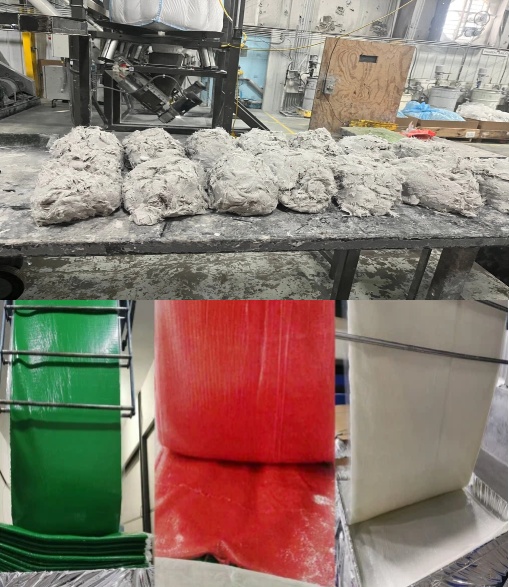

We deeply understand that customers' core demand in the composite material production field is not a single piece of equipment, but efficient, stable, and highly adaptable full-process production support. Therefore, our services always go beyond the limitation of "equipment delivery" — we not only provide you with high-quality core equipment such as SMC sheet machines, BMC/DMC mixers, and four-column/frame hydraulic presses, but also integrate the key links of "raw material preparation → sheet production → compression molding" to build a customized solution covering the entire link of composite material production for you, helping you achieve a closed-loop production process and maximize efficiency.
In response to the differentiated needs of customers in different industries, we have in-depth professional customization capabilities: whether it is process adaptation for special materials (such as carbon fiber SMC), optimization of molding parameters for specific products, or production line planning for different capacity scales, we can provide integrated services including hydraulic press unit parameter customization, whole-line equipment configuration optimization, and process connection commissioning based on the customer's actual production scenario. This ensures precise matching between equipment and production needs, avoiding resource waste.
We always prioritize the stability of customers' production and provide a full-lifecycle technical support and service system covering "pre-sales, in-sales, and after-sales": pre-sales, we offer professional process consultation and production line planning suggestions; in-sales, we cooperate to complete equipment installation, commissioning, and operation skill training; after-sales, we establish a rapid response mechanism to promptly solve issues such as equipment operation and maintenance, and process optimization. This comprehensively eliminates customers' production concerns, allowing them to focus on the development of their core businesses.
We are your trusted partner for composite molding equipment.
Contact us today to obtain professional press selection proposals and detailed technical documentation for your specific project.
Professional Guide: A Comprehensive Overview of Four-Column & H-Frame Hydraulic Presses for BMC/DMC/SMC Molding
CONTACT US
