

The World of Molding Compounds
Today, in the pursuit of lightweight, high strength and design flexibility, fiber-reinforced thermosetting composites have become the preferred choice in many industries.
BMC (Bulk Molding Compound), DMC (Dough Molding Compound, essentially the same as BMC), and SMC (Sheet Molding Compound) are the three most widely used and important materials among them. Although they share some commonalities, they each have their own strengths in terms of material form, performance, and application fields.
This article aims to provide B-end customers with a comprehensive and professional interpretation to help you make precise decisions based on the demands of terminal products.
Core Commonalities: What Makes Them Powerful?
Similar Base Composition: All consist of thermoset resin (typically unsaturated polyester or vinyl ester), reinforcing fibers (typically short glass fibers), fillers (e.g., calcium carbonate), and additives (initiators, thickeners, etc.).
Consistent Molding Process: Primarily use compression molding (hot-press molding), curing in heated metal molds under high pressure, making them efficient and suitable for mass production.
Shared Superior Properties: All offer excellent electrical insulation, corrosion resistance, heat resistance, mechanical strength, and dimensional stability.
In-Depth Difference Analysis: How to Choose?
|
Feature |
BMC / DMC |
SMC |
|
Form |
Irregular bulk, dough-like |
Dense sheet, roll form |
|
Fiber Length |
Shorter, typically 3-12mm, more random distribution |
Longer, typically 12-50mm, can be oriented for anisotropy |
|
Fiber Content |
Typically lower (15%-20%), high filler content |
Typically higher (20%-35% or more), lower filler content |
|
Flow & Moldability |
Excellent flowability, suitable for complex parts with deep cavities or fine details |
Limited flowability, better for large, relatively simple panels or shallow shells |
|
Mechanical Strength |
Good strength, but lower than SMC. Highly isotropic. |
Higher strength & toughness, especially impact strength. Strength can be directionally designed. |
|
Surface Finish |
Can produce excellent Class-A surfaces, ideal for appearance parts. |
Good surface finish, but generally slightly inferior to BMC. |
Pro Tip: DMC and BMC are now generally regarded as synonyms and can be used interchangeably. DMC sometimes specifically refers to formulations with a lower fiber content or slightly different flowability, but in commercial and general terms, BMC is the more common name.
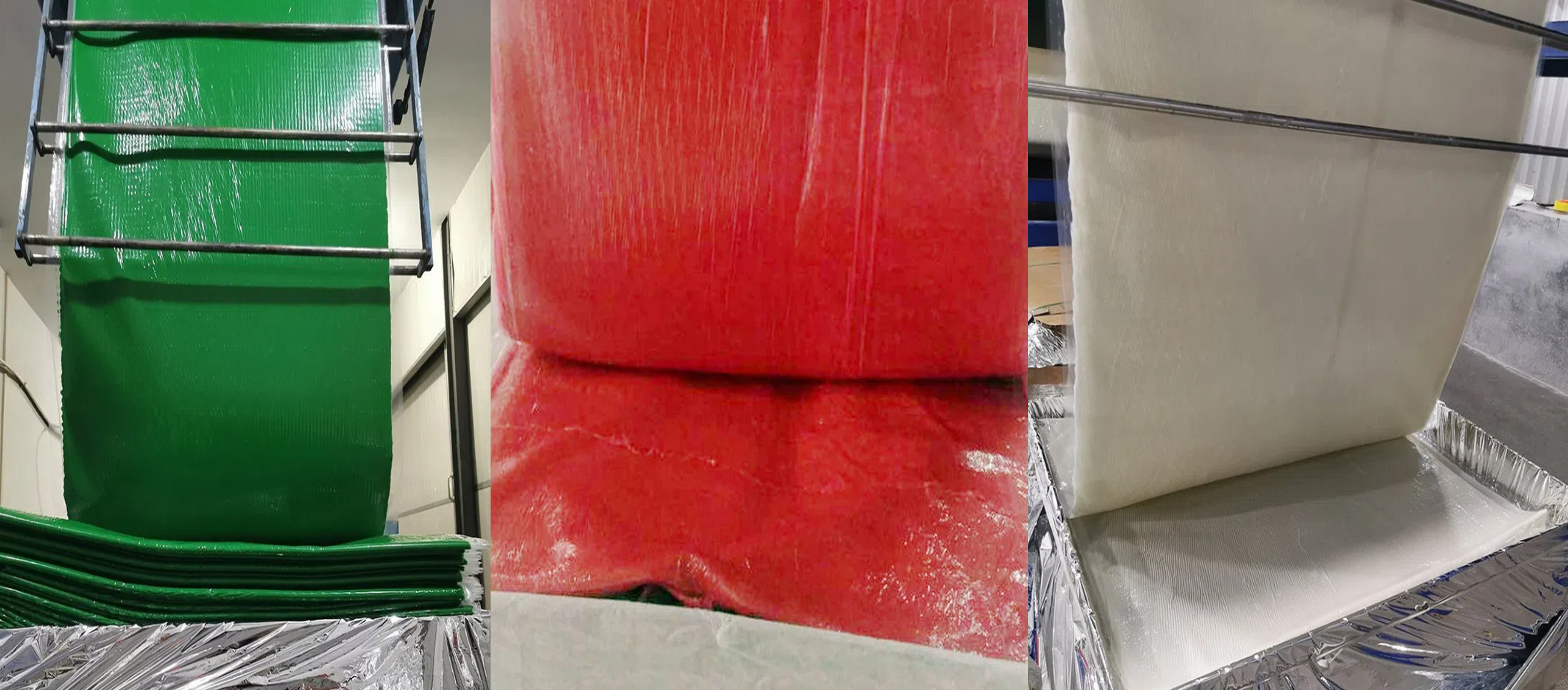
BMC/DMC:

SMC:
Application Scenarios & End-Product Guide
Typical BMC/DMC Applications (Focus on Complexity & Surface):
Automotive: Headlamp reflectors, engine covers, ignition system components.
Electrical Equipment: Circuit breaker housings, switches, insulators, meter boxes.
Household Appliances: Oven door handles, range hood parts, induction cooker bases.
Typical SMC Applications (Focus on Strength & Large Structures):
Automotive: Battery pack enclosures, truck front panels, bumper beams, underbody shields.
Construction: Building facade panels, toilet cubicles, shower trays, skylight domes.
Rail Transit: Interior panels for high-speed rail/subway, seat frames, equipment cabins.
Energy & Power: Distribution cabinet enclosures, wind power equipment covers.

Decision Flowchart: BMC/DMC or SMC?
- Does your part have very complex geometry, deep cavities, or fine ribs?
Yes → Prioritize BMC/DMC.
- Does your part require a Class-A surface finish (e.g., for appearance)?
Yes → Prioritize BMC/DMC.
- Is your part a large, panel-like structure requiring high strength and lightweight?
Yes → Prioritize SMC.
- Does your part require tailored, directional mechanical properties?
Yes → Prioritize SMC.
BMC/DMC and SMC are two key keys to the world of high-performance composites. Understanding their nuances is fundamental to successful product design, cost control, and quality assurance.
Not only are we experts in production lines for SMC sheets and equipment for BMC/DMC mixers, but we are also your strategic advisors in the field of new material applications. We offer comprehensive support (including raw materials, equipment and formulas) from core equipment to overall line planning.
Contact us immediately to obtain the professional material selection and production technology solutions tailored for your specific project.
BMC, DMC & SMC: A Comprehensive Professional Guide to Choosing the Right Thermoset Composite Solution
CONTACT US
