

This article delves into hydraulic press molds for BMC/SMC molding, analyzing how they serve as the decisive factor for precision, efficiency, and quality, enabling stable and efficient production.
Why is the Mold Critical?
A mold is not just a "cavity" that defines shape; it is a precision pressure vessel, heat conduction system, and venting system.Compared to injection molds, BMC/SMC molds are specifically engineered to handle higher clamping pressures, the flow characteristics of high-viscosity/fiber-reinforced materials, and the effective removal of air and volatiles.
Core Value Proposition
- The Guarantor of Precision: Determines dimensional stability and part-to-part consistency.
- The Definer of Surface Finish: The mold cavity's surface finish is directly replicated onto the product.
- The Influencer of Efficiency: Optimized runners and ejection systems significantly reduce cycle times.
- The Controller of Cost: Long service life and low failure rates directly reduce the cost per part.

Mold Construction & Design
Material selection: Pre-hardened mold steel and H13 hot working mold steel are chosen. The pre-hardened mold steel has excellent comprehensive mechanical properties, while the H13 hot working mold steel can maintain high strength, high wear resistance and corrosion resistance even in high-temperature environments, making it suitable for mold scenarios with high load and long-term use.
Surface treatment process: Three processes are adopted: polishing (including mirror polishing and matte polishing), hard chrome plating, and nitriding. Polishing can improve the surface smoothness of the mold cavity, ensuring the quality of the product appearance; hard chrome plating can enhance the surface hardness and corrosion resistance, prolonging the mold life; nitriding treatment can significantly improve the surface wear resistance and fatigue resistance, optimizing the demolding effect.


How to select the most suitable mold?
Selection criteria considerations
- Product requirements: dimensions, structural complexity, appearance standards (such as A-level surface), tolerance requirements.
- Material properties: The difference in fluidity between BMC and SMC has a subtle impact on mold design.
- Production scale: Mass production aims for high durability and automation; small batches can focus on cost-effectiveness.
- Equipment matching: The mold size must be perfectly matched with the platform, stroke, and tonnage of the hydraulic press.
A well-designed and meticulously manufactured hydraulic machine mold is far more than just a "metal box". It is the core technology carrier that transforms the potential of BMC/SMC materials into high value-added and highly competitive products. Investing in professional molds is equivalent to investing in the quality of the products, the efficiency of production, and the success in the market.
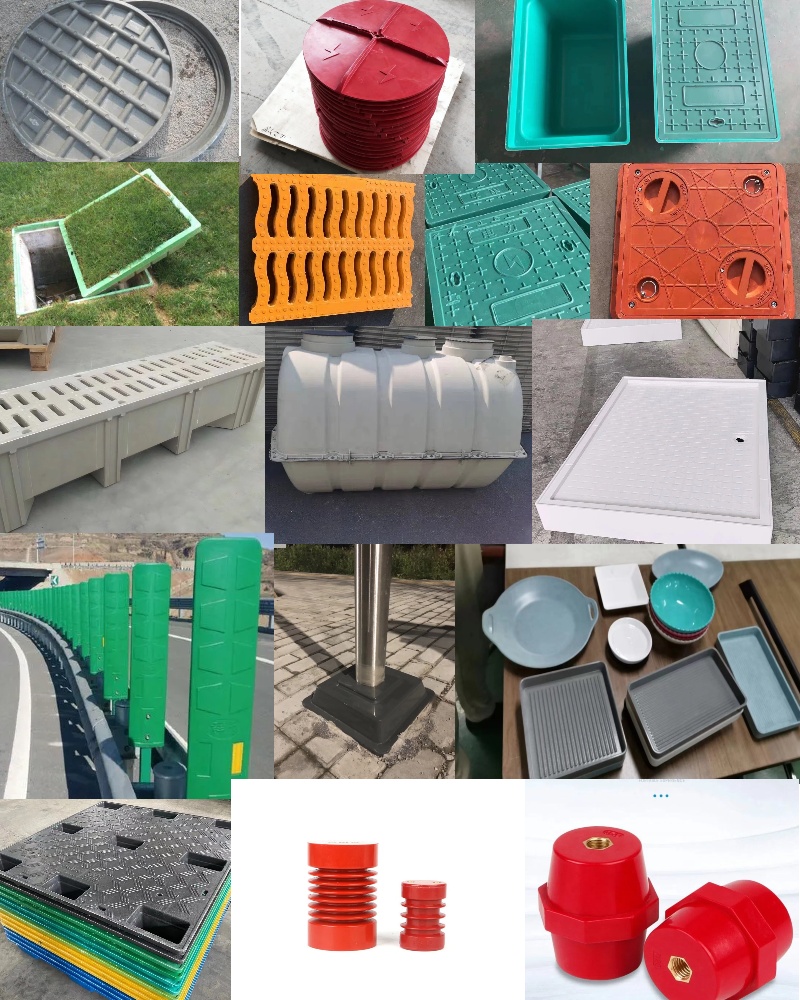
Please bring along the product drawings or technical requirements, and we will jointly explore the most optimal mold solution with you.
(Mobile/WhatsAPP:+86 15851295260; Email:chris.xie@ilihomey.com )
Visit our official website to view the product catalogue and success stories.

The Source of Precision: A Guide to High-Performance Hydraulic Press Molds for BMC/SMC Products
CONTACT US
