

In the fields of electrical engineering, automobiles, and household appliances, BMC (globular molding compound) and DMC (dough-like molding compound) are crucial intermediate materials for manufacturing high-performance composite materials products. They support the production of insulation components, lightweight structural parts, etc., and directly affect the quality and lifespan of the final products. The excellent properties of their mechanical strength, electrical insulation, and heat resistance depend on the uniformity of material mixing during the preparation process. If the mixing is not uniform, it will lead to a decline in material performance and quality issues in the products.
The kneader, as the core equipment for achieving high uniformity mixing, can break down material agglomeration and promote the fusion of components to provide stable raw materials. This article aims to systematically analyze the working principle, machine structure, main applications, and end products of BMC/DMC kneaders, helping you gain a deeper understanding of this key equipment and providing professional references for production decisions.
Core Principles - Why is the mixer the key to the mixing process?
The reason why the kneader can become the core equipment for achieving high uniformity in mixing lies in its efficient three-in-one concept of "shearing, squeezing, and folding". This is fundamentally different from traditional mixers - traditional mixers are mainly used for low-viscosity liquid mixing and rely mainly on convection, making it difficult to handle paste-like or agglomerated materials with high viscosity and high solid content such as BMC/DMC. However, the kneader is specifically designed for such materials and can achieve uniform dispersion at the microscopic level through intense shearing and squeezing actions.
Let's take a closer look at its working principle: In the aspect of shearing action, the two Z-shaped (or other irregular shapes, such as Sigma) blades of the kneader rotate in opposite directions at different speeds, which can generate a strong shear force on the materials, effectively disintegrating fiber clumps and breaking gel lumps; In the aspect of extrusion action, the narrow gap between the blades and the barrel body, as well as the mutual meshing of the two blades, will exert a huge extrusion and kneading force on the materials, just like "mixing dough", ensuring that all components such as resins, fibers, fillers, and additives are fully kneaded; At the same time, the special design of the blades also enables the materials to have both axial and radial movements within the kneader, forming a three-dimensional convection circulation, which can avoid mixing dead zones and ultimately provide stable and high-quality raw materials for BMC/DMC production.
Machine Construction - A Reflection of Professionalism and Durability
The drive system is the core component for power output. It is mainly composed of two key parts: the motor and the reducer. These two components work together to achieve stable and efficient power transmission.
- Motor: Provides power, usually with a high-torque design.
- Reducer: A key transmission component, it demands high precision and rigidity to ensure smooth operation of the blades and to transmit huge torque.


The core objective of the hybrid system is to achieve efficient and uniform mixing of materials. Its performance depends on the precise coordination between the kneader and the paddles. The design of both components directly determines the mixing effect and applicable scenarios.
- Mixing tank (cylinder body): Usually designed as a "W" shape or "U" shape double tank, it perfectly matches the Z-type/Sigma blades, ensuring complete and seamless mixing. The material is mostly stainless steel, and the inner wall can be mirror-polished or specially treated for easy cleaning and anti-sticking.

- Blades (mixing paddles): The most commonly used type is the Z-shaped paddle/Sigma-shaped (depending on the characteristics of the material). There is usually a certain speed difference between the two blades (such as 1:1.5 or 1:2), which is the key to generating strong shear force. Material and Craftsmanship: High-strength alloy steel. The surface can be treated with hardening (such as chrome plating), significantly enhancing wear resistance and service life.

The material discharge from the tank is achieved by driving the entire kneader (cylinder) to rotate hydraulically or electrically, allowing the material to be discharged from the opening. This is a traditional and straightforward method of material removal.
Screw discharge involves setting up a screw conveying mechanism at the bottom or side of the kneader. Through the rotation of the screw, the material is forcibly pushed to the discharge port, which belongs to the forced conveying type of discharge.


PLC + HMI (human-machine interface), the kneader jacket temperature control system, and safety interlock - these three components work together to form the automated control and safety guarantee system of the kneader.
PLC + HMI (Human-Machine Interface) realizes automatic control and can preset and store multiple sets of process parameters (such as mixing time, rotational speed, and temperature).

 The kneader can be equipped with a jacket, which can be filled with cold water or hot water to precisely control the temperature of the materials and adapt to the curing characteristics of different resins.

Safety interlock: Ensuring the safety of the equipment during operation and maintenance.
Main purpose - not merely "mixing"
In this context, the core value of the kneader goes far beyond basic mixing. It serves as a "key preforming equipment" for unsaturated polyester resin-based composite materials, achieving a deep integration of fibers, fillers and resin through precise processes, laying the foundation for the quality of subsequent products.
Unlike the "simple stirring" of ordinary mixing equipment, the core of the kneader is to achieve the dual effects of "infiltration + mixing". It precisely processes multi-form and multi-characteristic material combinations (liquid resin, solid fibers/fillers, powder additives):
The liquid unsaturated polyester resin serves as the "matrix", and needs to fully penetrate into the gaps of chopped glass fibers, while encapsulating the solid mineral fillers (such as calcium carbonate) and pigment particles.
By leveraging the shear force of the Z-type/sigma blades and the integrated design of the mixing tank, the "interface barriers" between the materials are broken, avoiding problems such as "resin agglomeration", "fiber exposure", and "filler detachment", and achieving macroscopic uniformity and microscopic integration of each component.
The final manifestation of the value of the terminal product - the kneader machine
The final products of the kneader cover core components for multiple industries. Its essence lies in the precise material processing at the front end, which directly ensures the core performance of the final products (such as heat resistance, insulation, and strength). It serves as a crucial bridge connecting raw materials with marketable products.
- Automotive industry: Headlight reflectors, engine hood covers, battery trays, intake manifolds, etc. (requiring heat resistance and stable dimensions).
- Electrical appliances: Insulators, switch housings, circuit breaker bases, transformer housings, etc. (requiring high electrical insulation, flame retardancy, and arc resistance).
- Household appliances: Microwave oven door frame, air conditioner outlet, rice cooker base, washing machine pulley, etc. (Require good appearance, resistance to aging, and high strength.)
- Other fields: Bathroom fixtures, office equipment casings, power tool casings, etc.
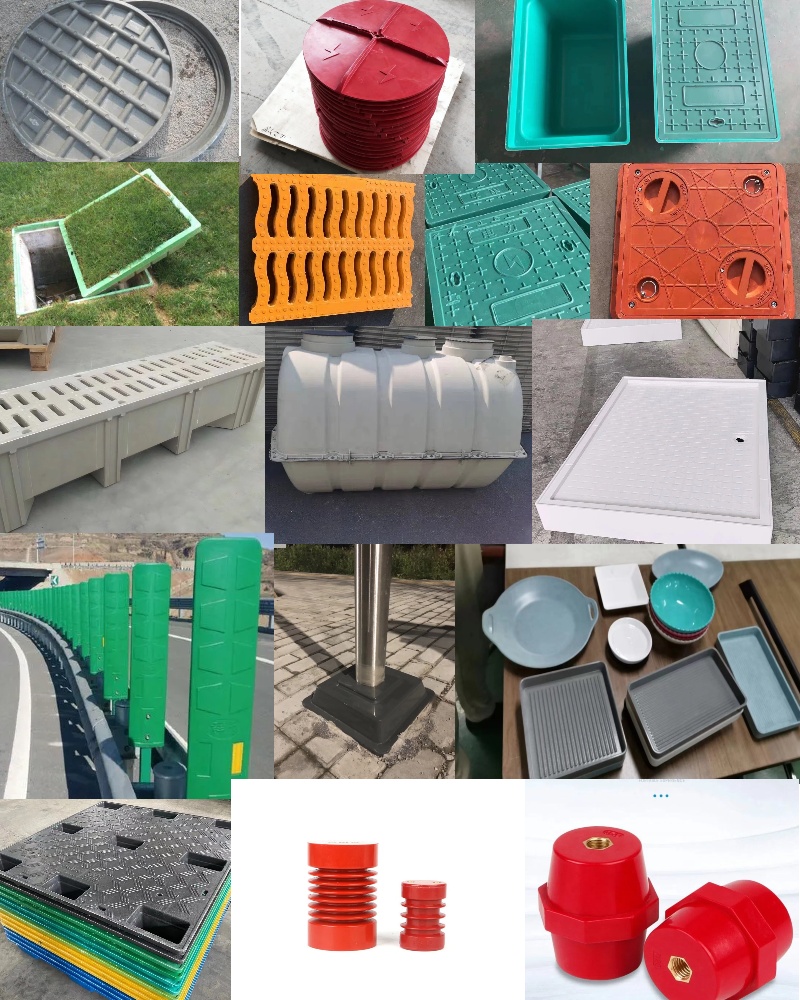
The BMC/DMC mixer, as the "heart" of the composite material production process, its advanced technology and reliability directly determine the quality, performance and production cost of the final product.
If you would like to learn more about the technical parameters or customization options of the BMC/DMC mixer, please feel free to contact our technical experts.
(Mobile/WhatsAPP:+86 15851295260; Email:chris.xie@ilihomey.com )
Visit our official website to view the product catalogue and success stories.
In-depth Exploration of BMC/DMC Kneading Machines: The Core Equipment for High Uniformity Mixing
CONTACT US
